

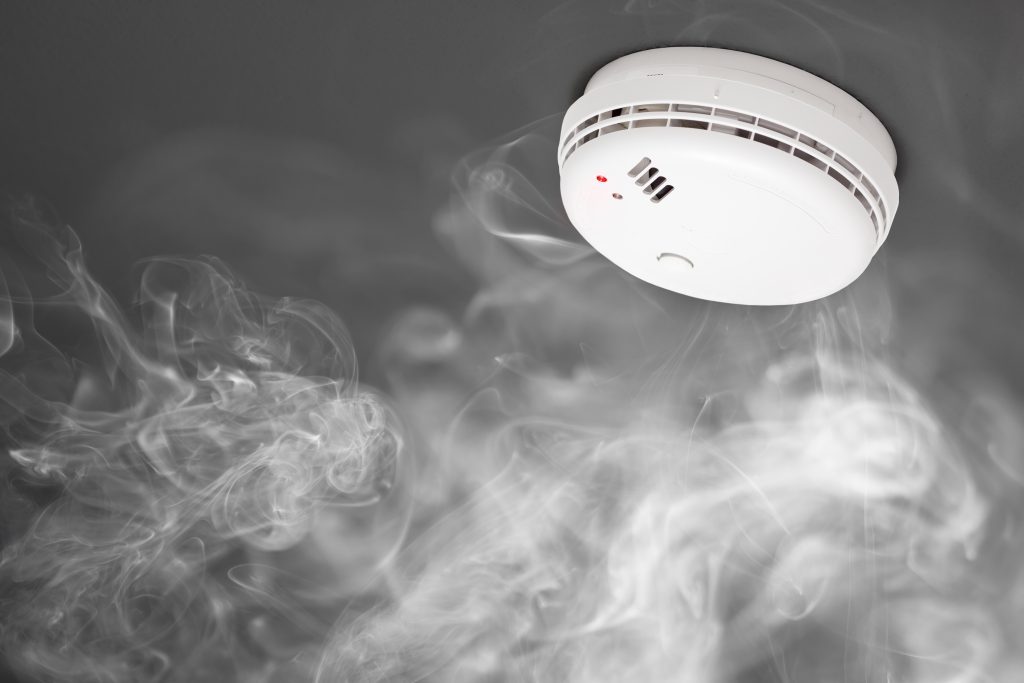
Everyday safety
Working smoke alarms provide early warning of a fire. Learn where alarms belong, how to test them, and when to replace them.
Smoke Alarm Safety
- A closed door may slow the spread of smoke, heat, and fire. Install smoke alarms in every sleeping room and outside each separate sleeping area, on every level of the home.
- Smoke alarms should be interconnected. When one sounds, they all sound.
- Large homes may need extra smoke alarms.
- Test your smoke alarms at least once a month.
- There are two kinds of alarms. Ionization alarms are quicker to warn about flaming fires; photoelectric alarms are quicker for smoldering fires. It’s best to use both types.
- When a smoke alarm sounds, get outside and stay outside.
- Replace all smoke alarms in your home every 10 years.
- Smoke alarms are not expensive and are worth the lives they can help save.
- A smoke alarm with a dead or missing battery is the same as having no smoke alarm at all. Take care of your alarms according to the manufacturer’s instructions.
Educational Videos
Smoke Alarm Safety — Video 1
Smoke Alarm Safety — Video 2
Share These Safety Tips
Share these graphics with your family and friends to spread the word. We encourage you to print these and also share on social media.
Content Source: National Fire Protection Association and U.S. Fire Administration
Download and share
Questions about fire safety?
Request a safety presentation or contact Company 12. For an emergency, call 911.
Request a visit